
What are Sattvic Cooking Principles ?

Ancient Principles, Modern Kitchens – Ayurveda’s sattvic food theory translates easily into today’s mindful, plant-based kitchens.

Cooking for Calm & Clarity – Meals prepared sattvically promote digestion, balance, and a peaceful mind.
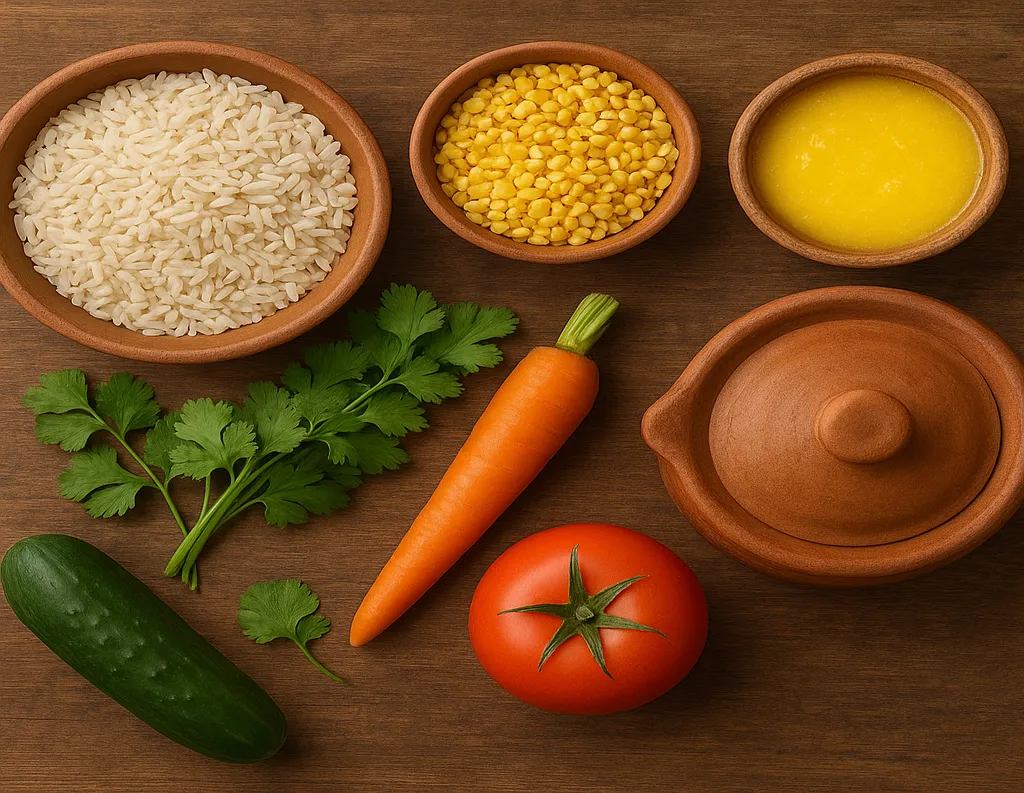
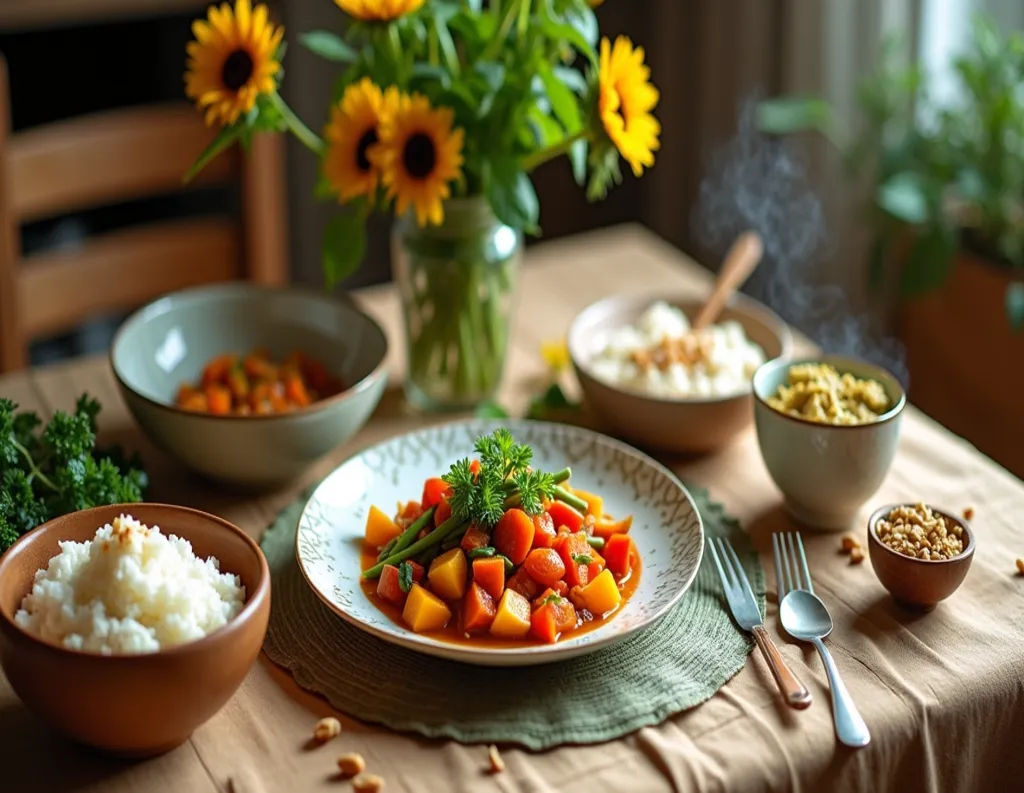
Traditional setup with fresh vegetables, grains, and clay pot on wooden counter based on sattvic cooking principles.

Beyond Ingredients: Energy Matters – How you chop, cook, and serve food is as important as what’s on the plate.
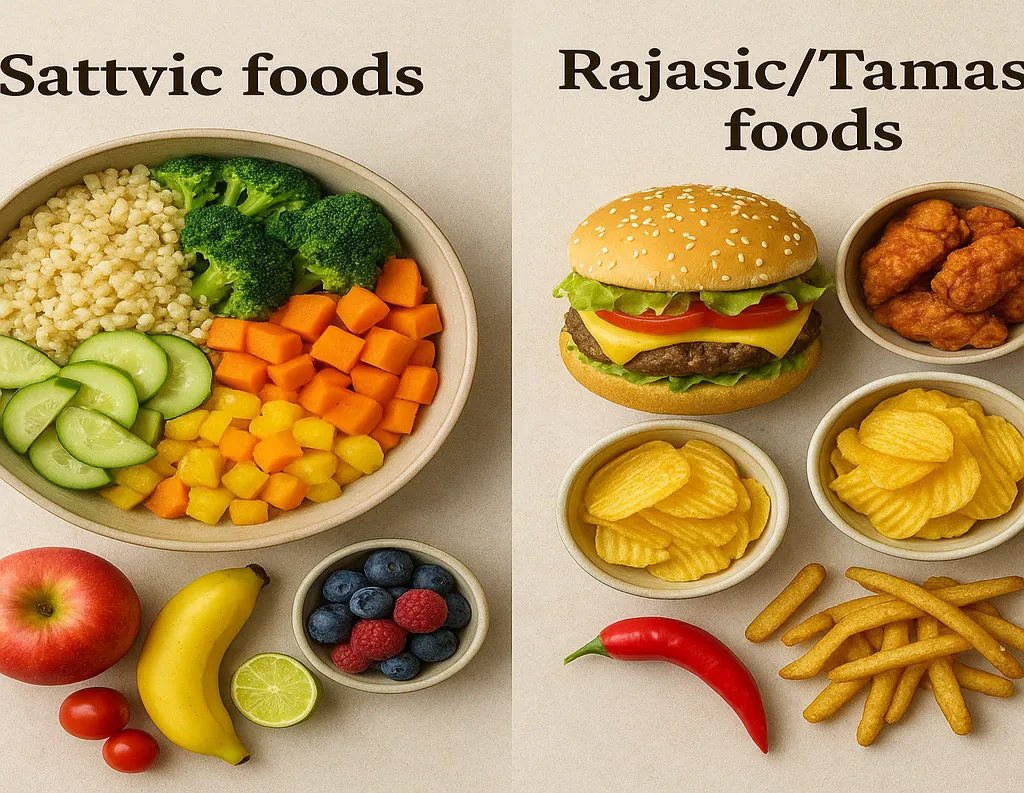
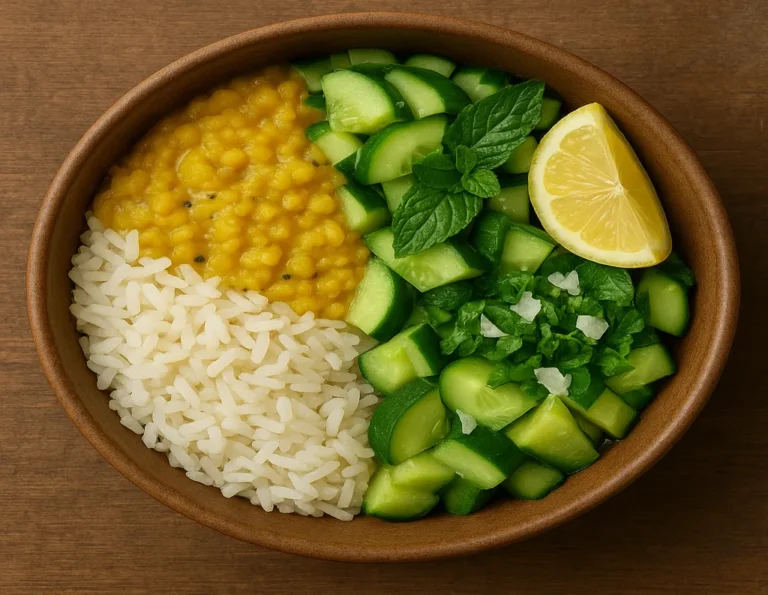
Comparison of sattvic foods like rice, dal, vegetables vs rajasic/tamasic foods like chili, fried snacks,meat etc

Quick Summary

  • Sattvic cooking principles = purity, balance, ease of digestion, and preservation of prana (life energy).
  • ✅ Based on Ayurveda + yoga diet guidelines, focusing on grains, legumes, seasonal vegetables, gentle spices, nuts, and dairy (or sattvic vegan substitutes).
  • ✅ Cooking style avoids stimulants (coffee, onion, garlic, excess chili) and heavy foods (fermented, over-fried, stale).
  • ❌ Avoid rajasic (overstimulating) and tamasic (heavy, dulling) foods.

Core Sattvic Cooking Principles

Principle

Meaning

In Practice (Examples)

Purity & Freshness

Foods should be natural, unprocessed, seasonal

Buy fresh produce, cook daily, avoid leftovers

Gentle Cooking

Preserve prana with mindful heat

Steaming, boiling, light sauté, no over-frying

Balance

Each meal includes grain, legume, veg, spice

Rice + moong + spinach + cumin ghee

Mindful Prep

Mood & method influence food’s energy

Cook in calm mind, gratitude before serving

Seasonal Alignment

Adjust foods/spices by climate & season

Cooling cucumber in summer, warming ginger in winter

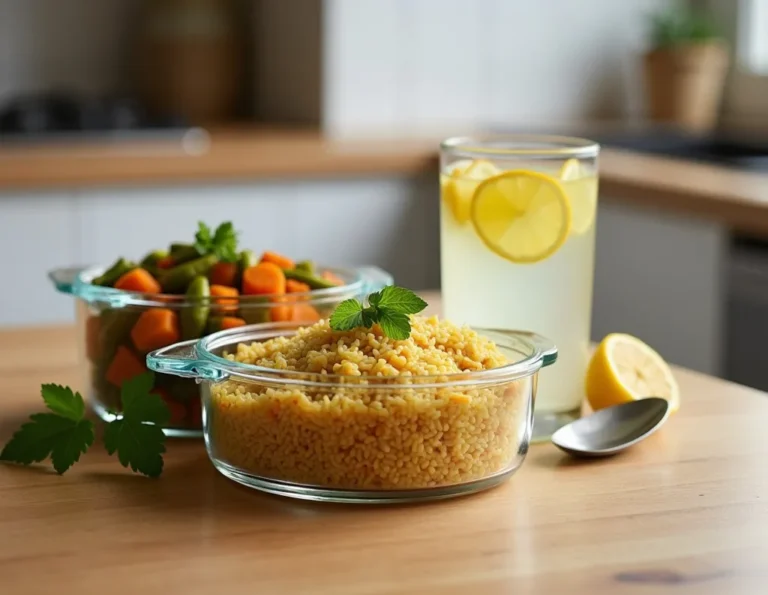
Sample sattvic meal plan with oats, rice and dal, vegetable stew

Sample Sattvic Day Menu (Good–Better–Best)

Good (Simple Start):

  • ✨ Breakfast – Warm oats with dates & cardamom.
  • ✨ Lunch – Rice + moong dal + zucchini + ghee.
  • ✨ Dinner – Vegetable khichdi with ginger.

Better (Balanced Routine):

  • ✨ Breakfast – Fruit & soaked almonds.
  • ✨ Lunch – Quinoa + spinach dal + pumpkin curry.
  • ✨ Dinner – Vegetable stew + chapati + mint chutney.

Best (Season-Aligned):

  • ✨ Breakfast – Fresh seasonal fruit & herbal tea.
  • ✨ Lunch – Rice + moong + sautéed greens + coconut garnish.
  • ✨ Dinner – Millet porridge with warming spices in winter / cucumber-yogurt rice in summer.

Health & Spiritual Rationale

  • Physical Health: Easy-to-digest meals reduce bloating, support gut health, and sustain energy.
  • Mental Clarity: Sattvic foods calm the nervous system, making meditation and yoga deeper.
  • Spiritual Growth: In yogic philosophy, food is not just fuel — it becomes your thoughts. Sattvic cooking refines both body and mind.
  • Environmental Harmony: Seasonal, plant-forward cooking naturally reduces waste and supports local food cycles.

Beginner’s How-To (Checklist)

When starting sattvic diet, remember:

  • 🍚 Grains: Rice, quinoa, or millet as base.
  • 🌱 Protein: Moong dal, mung beans, or paneer (or tofu for vegan).
  • 🥦 Vegetables: Always seasonal, lightly steamed/sauteed.
  • 🧈 Spices & Fats: Cumin, turmeric, coriander, fennel, ghee or coconut oil.
  • 🍯 Avoid: Onion, garlic, mushrooms, brinjal, coffee, vinegar, alcohol.
  • 🙏 Mindset: Cook calmly, avoid rushing or multitasking.

Explore More Sattvic Food Wisdom & Holistic Lifestyle Tips

Discover more nourishing recipes in our Sattvic Food section section or dive deeper into mindful living with our Yoga & Meditation practices. These paths together support a sattvic lifestyle rooted in balance, clarity, and wellness.

📰 More Insights on Sattvic Food

Discover blog posts, importance, recipes of Sattvic food

❓FAQs On Sattvic Cooking Principles

Yes, replace dairy (milk, ghee, paneer) with coconut oil, oat milk, or almond milk.

No, sattvic cooking allows gentle spices (cumin, turmeric, coriander, ginger). Just avoid excess heat.

They are essentially the same — yoga diet is the applied form of sattvic cooking, meant to support meditation and clarity.

Not at all. It relies on seasonal vegetables, grains, and legumes — accessible in US/EU supermarkets.

Yes, but only for 1–2 days. Ayurveda prefers freshly cooked food, but refrigerated grains/legumes can be used if reheated gently.

Leave a Reply

Your email address will not be published. Required fields are marked *